01
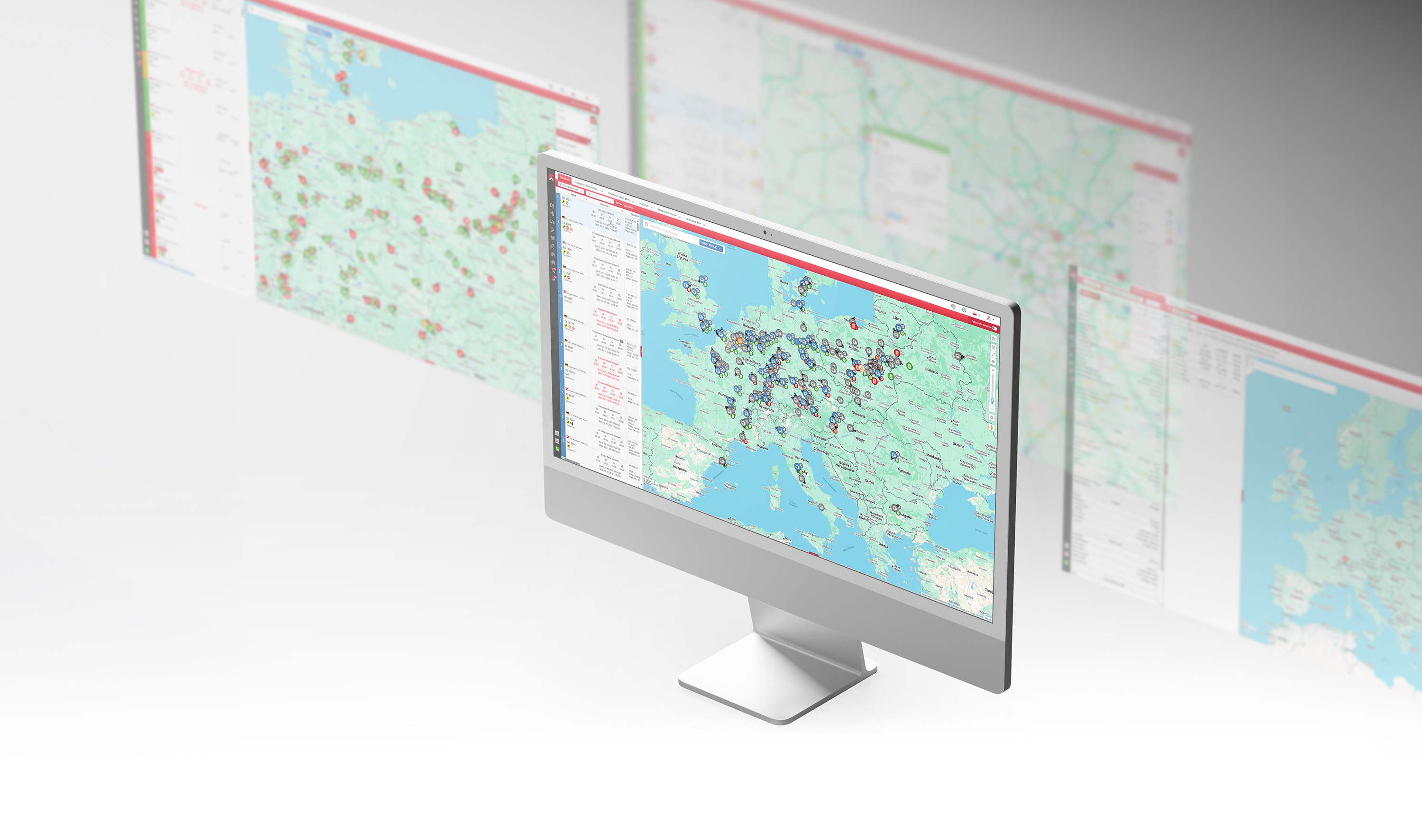
Atrax4 GPS
Available on desktop and mobile devices.
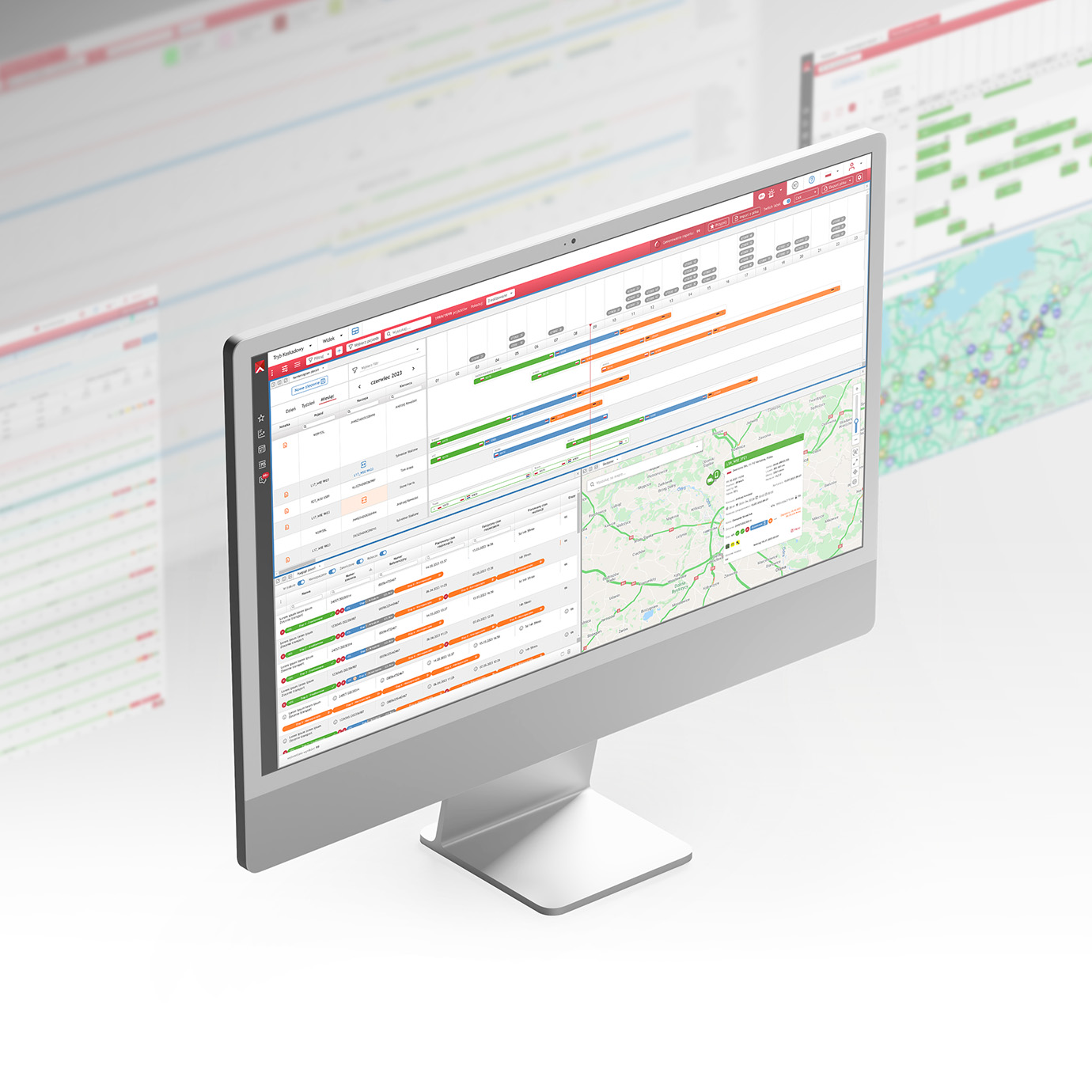
Everything within one system that supports fleet management and transport operations.
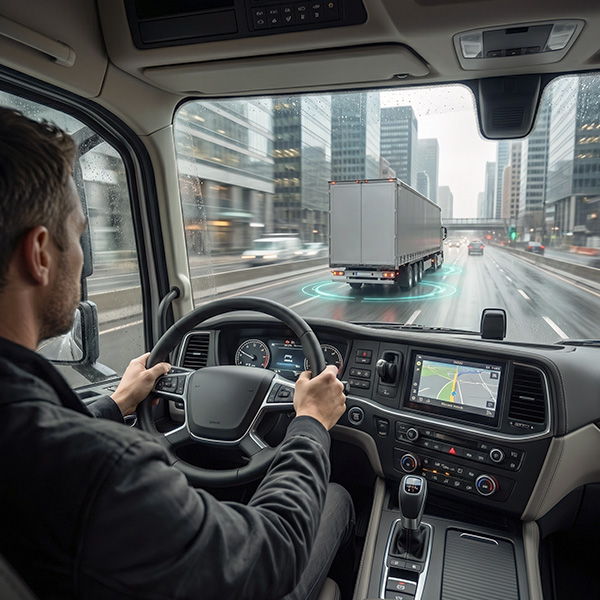

Monitoring, analytics, and operational control within one system.
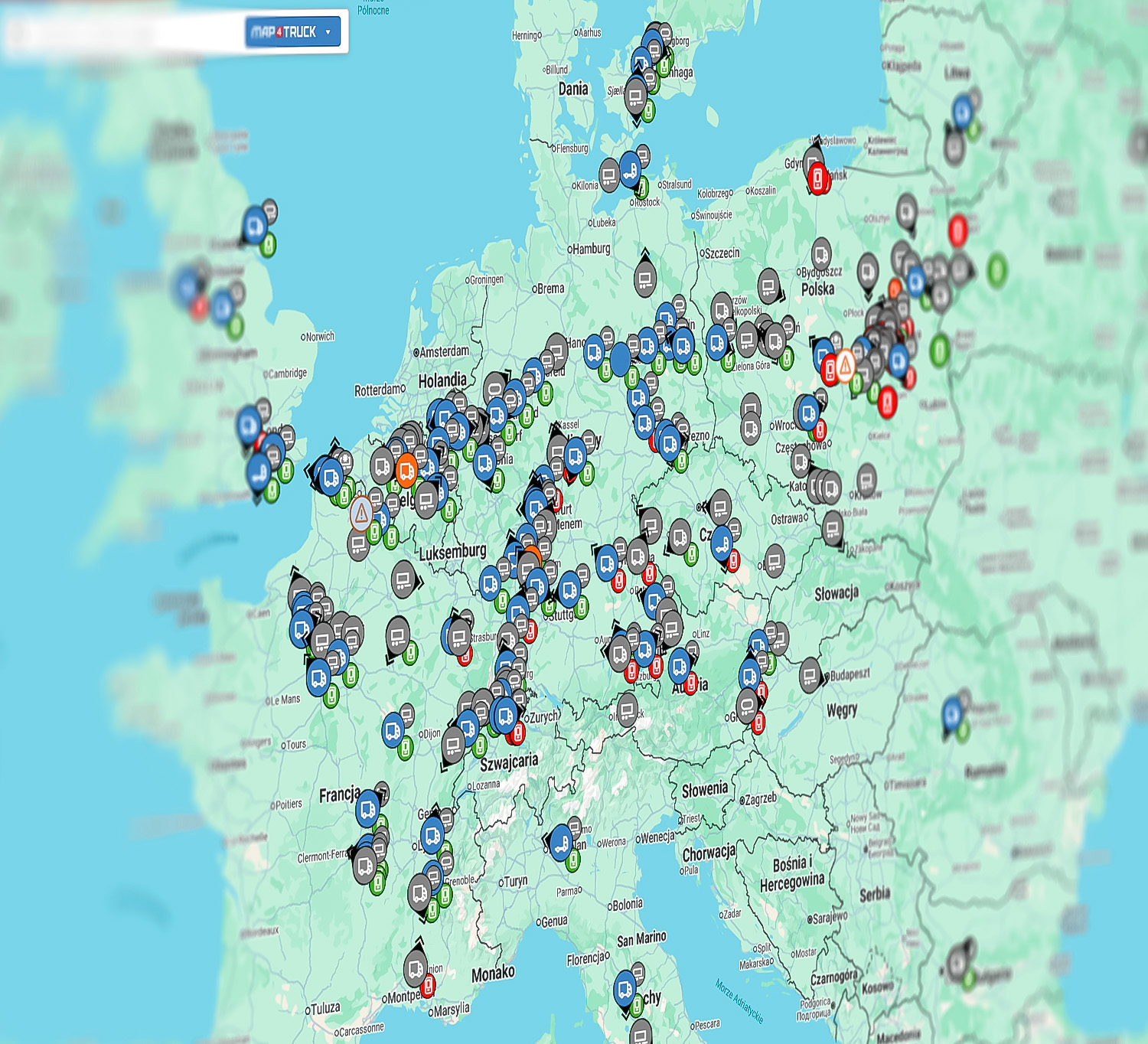
The system displays the current vehicle location in real time, making route supervision easier and enabling faster response to unexpected changes.
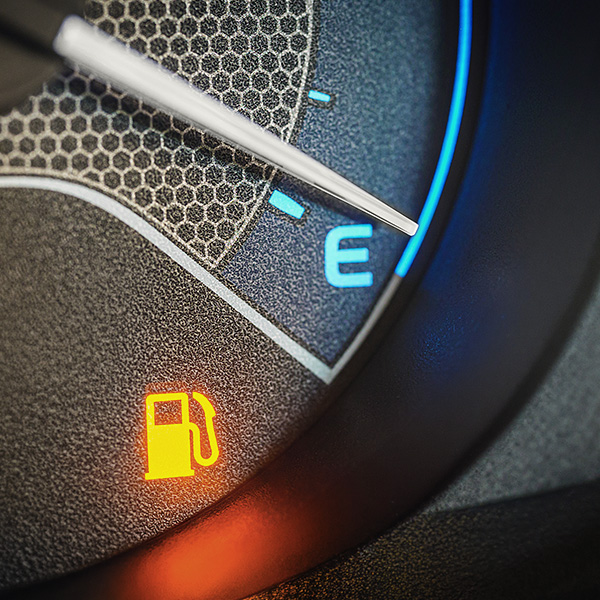
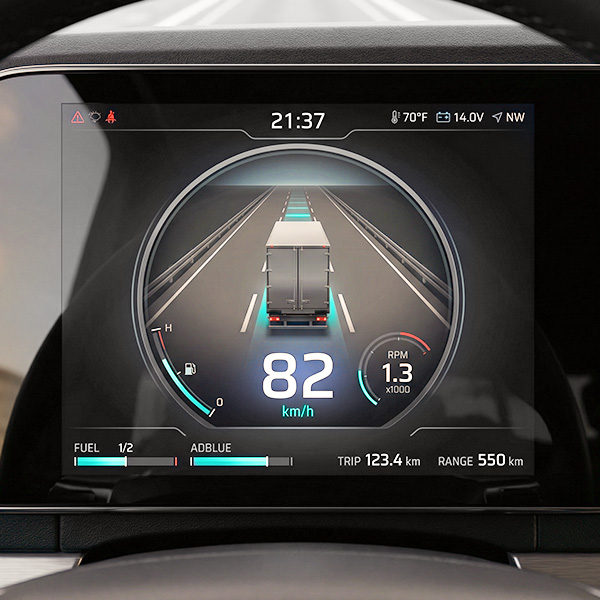
Continuous visibility of fuel levels helps improve consumption control and quickly identify situations that may generate additional costs.
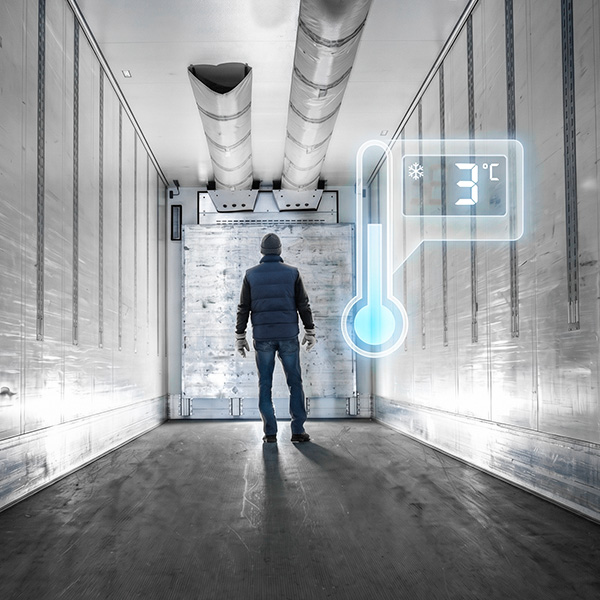
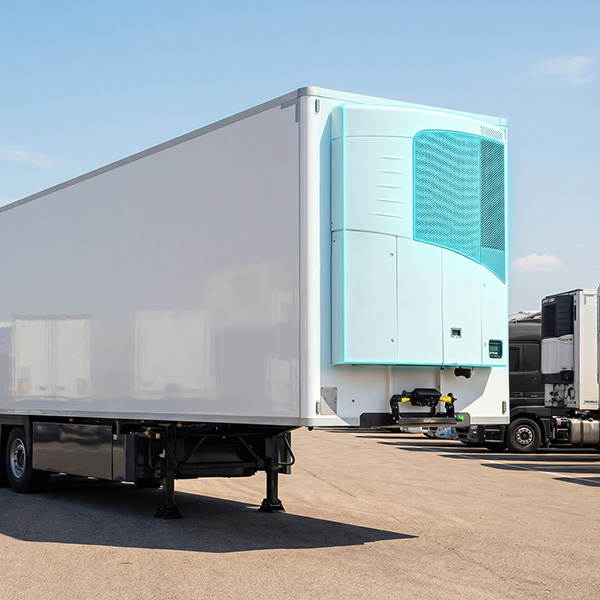
Real-time temperature monitoring helps maintain control over transport conditions and enables faster response to deviations critical to cargo safety.
Stop data helps analyze route progress, control downtime duration, and quickly identify unplanned stops.
Trip history provides a complete overview of completed routes, making it easier to analyze events and verify transport execution.
The current vehicle status allows quick verification of whether the vehicle is moving, stopped, or performing specific operations.
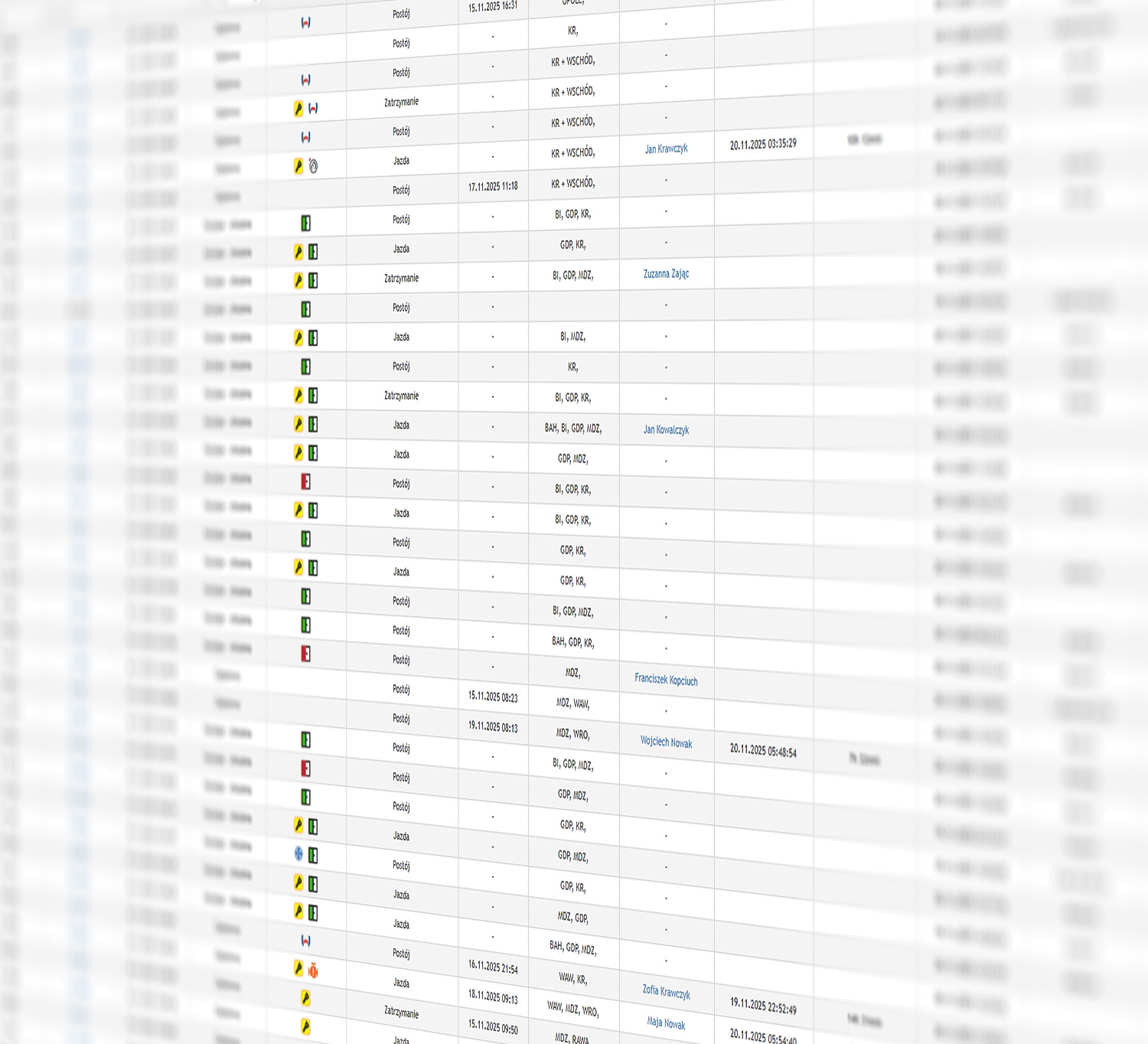
The system shows how individual vehicles are being utilized, making it easier to assess workload and better supervise overall fleet operations.
Vehicle documents remain organized and easily accessible, simplifying daily administrative control and reducing the risk of oversights.
The system helps track technical inspection deadlines, making it easier to keep vehicles operational and reduce the risk of unplanned downtime.
Vehicle operating costs are collected in one place, making expense analysis easier and providing greater transparency in fleet management.
Remote DDD file download streamlines administrative processes and enables faster access to data without requiring physical access to the vehicle.
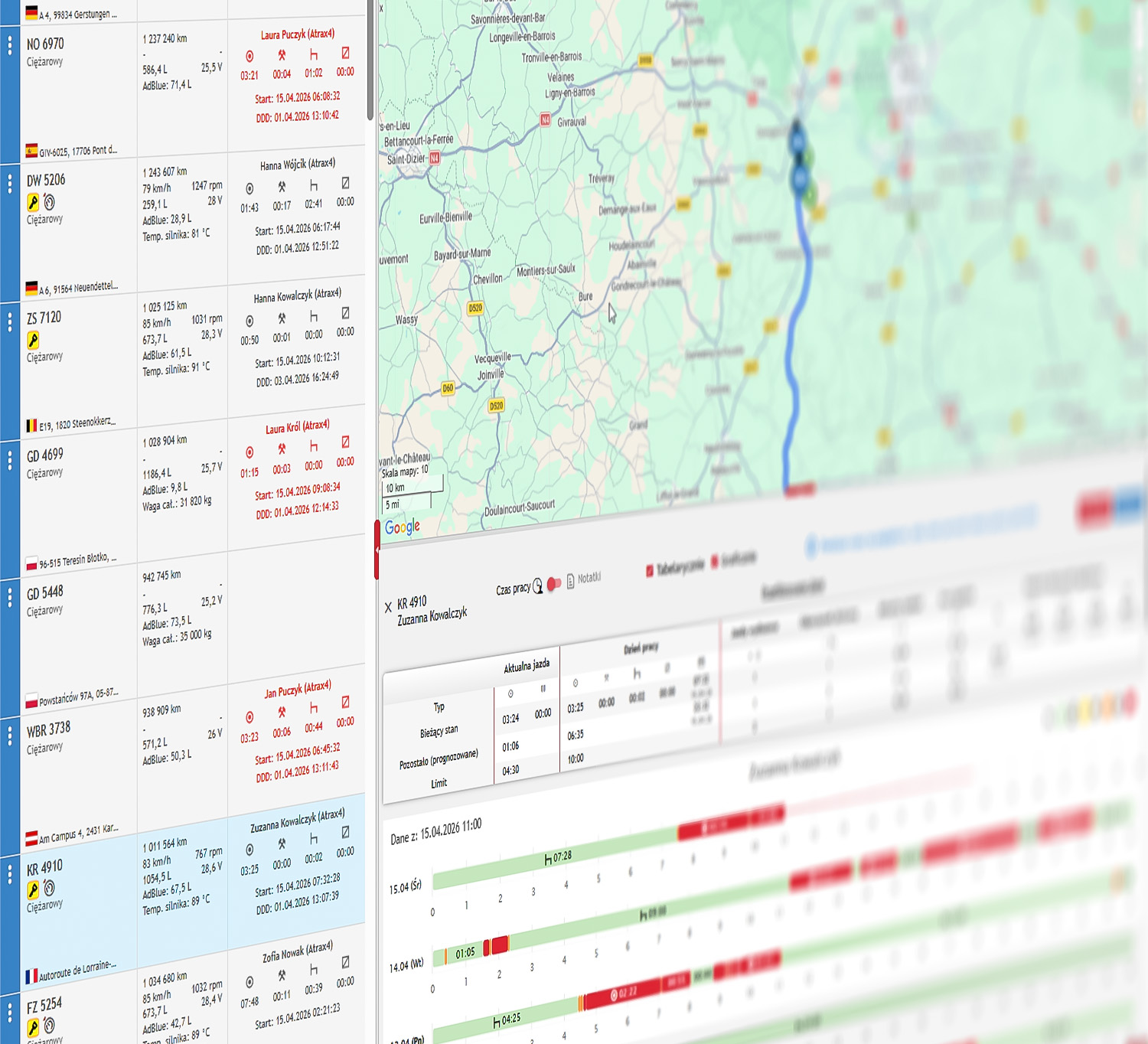
The system shows which driver is currently logged into the vehicle, allowing route data and events to be clearly assigned to a specific person.
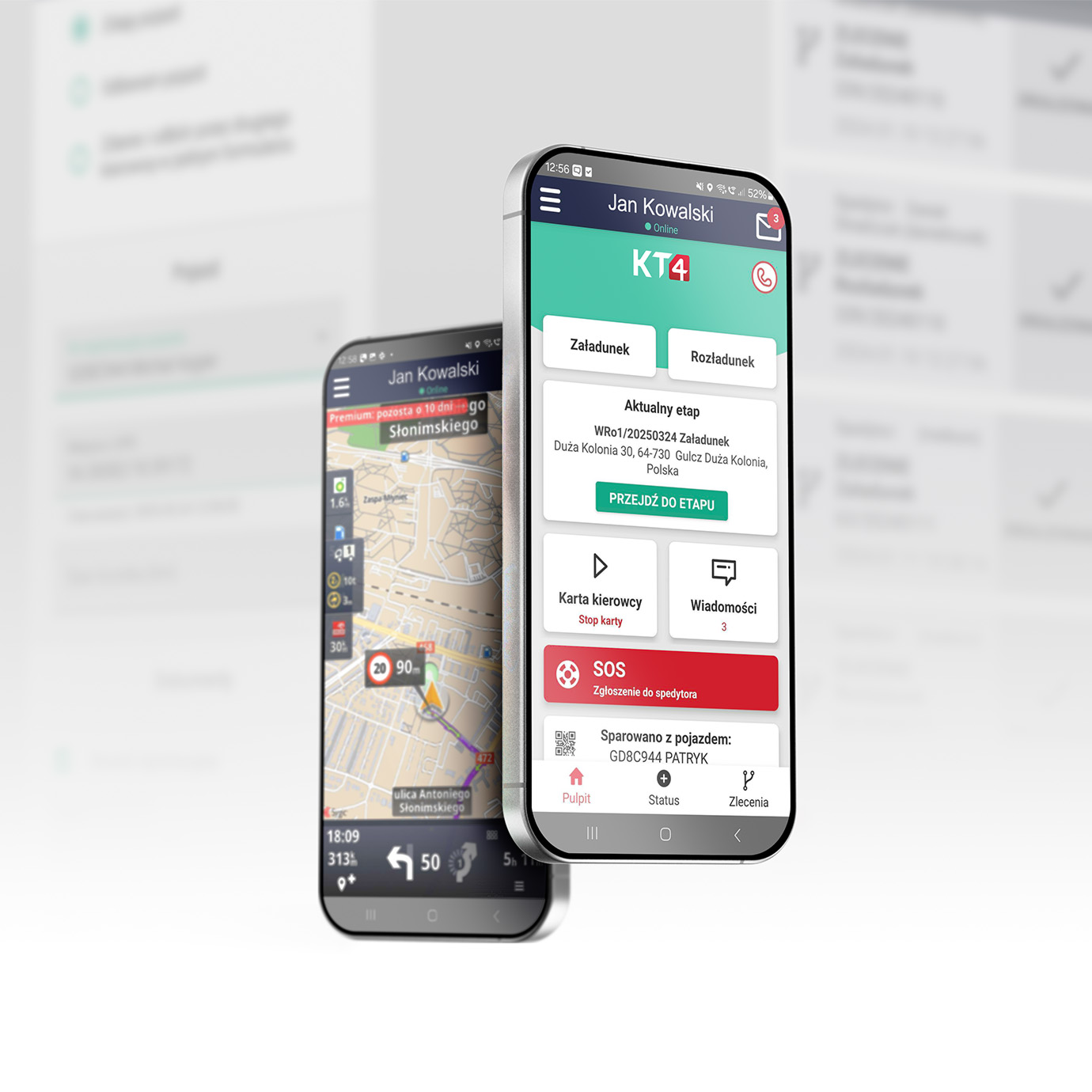
Direct communication with the driver simplifies the exchange of important information and supports smoother day-to-day operational coordination.
The system enables orders to be sent directly to the driver, streamlining information flow and reducing the risk of misunderstandings.
Precisely planned routes can be sent directly to the driver within the system, helping ensure transport execution follows the intended plan.
Data on driving behavior helps evaluate driver habits more accurately and identify areas that impact operating costs and road safety.
Reports present driver activity throughout the route, making trip analysis easier and providing a clearer view of daily vehicle utilization.
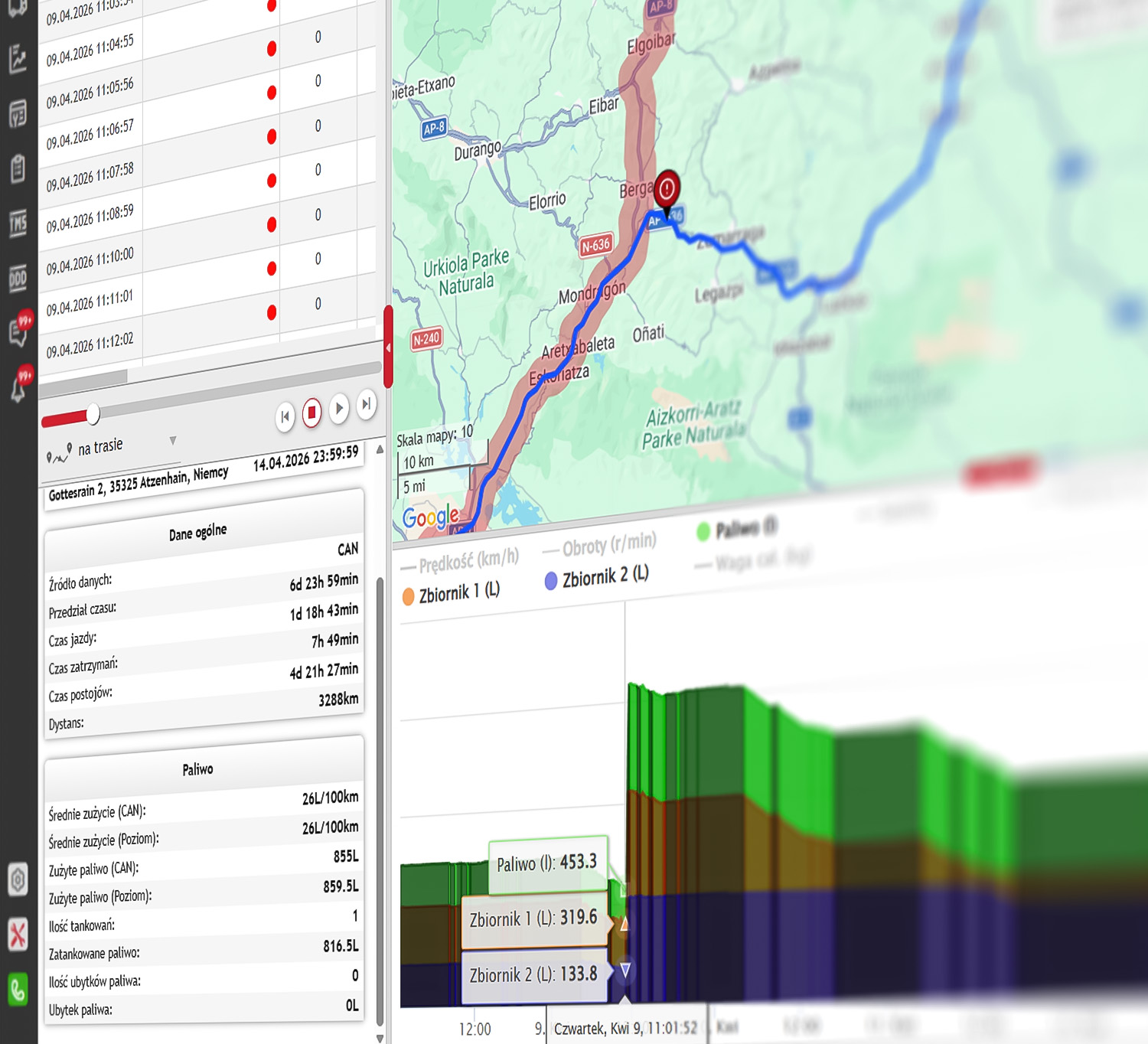
The system displays the current fuel level, making it easier to monitor tank status in real time and quickly detect unexpected changes.
Fuel consumption data helps better assess vehicle performance on the road and provides greater transparency into operating costs.
The system shows how much fuel is consumed during stops, making it easier to analyze losses and identify areas that require greater control.
Visibility into fuel consumed by Webasto provides a more complete picture of actual fuel usage and enables more accurate analysis of total fuel consumption.
The system records refueling events and fuel losses, making it easier to quickly identify irregularities and respond to situations affecting costs.
Reports show fuel consumption levels and CO₂ emissions, making it easier to analyze vehicle efficiency and providing a better basis for evaluating costs and fleet environmental impact.
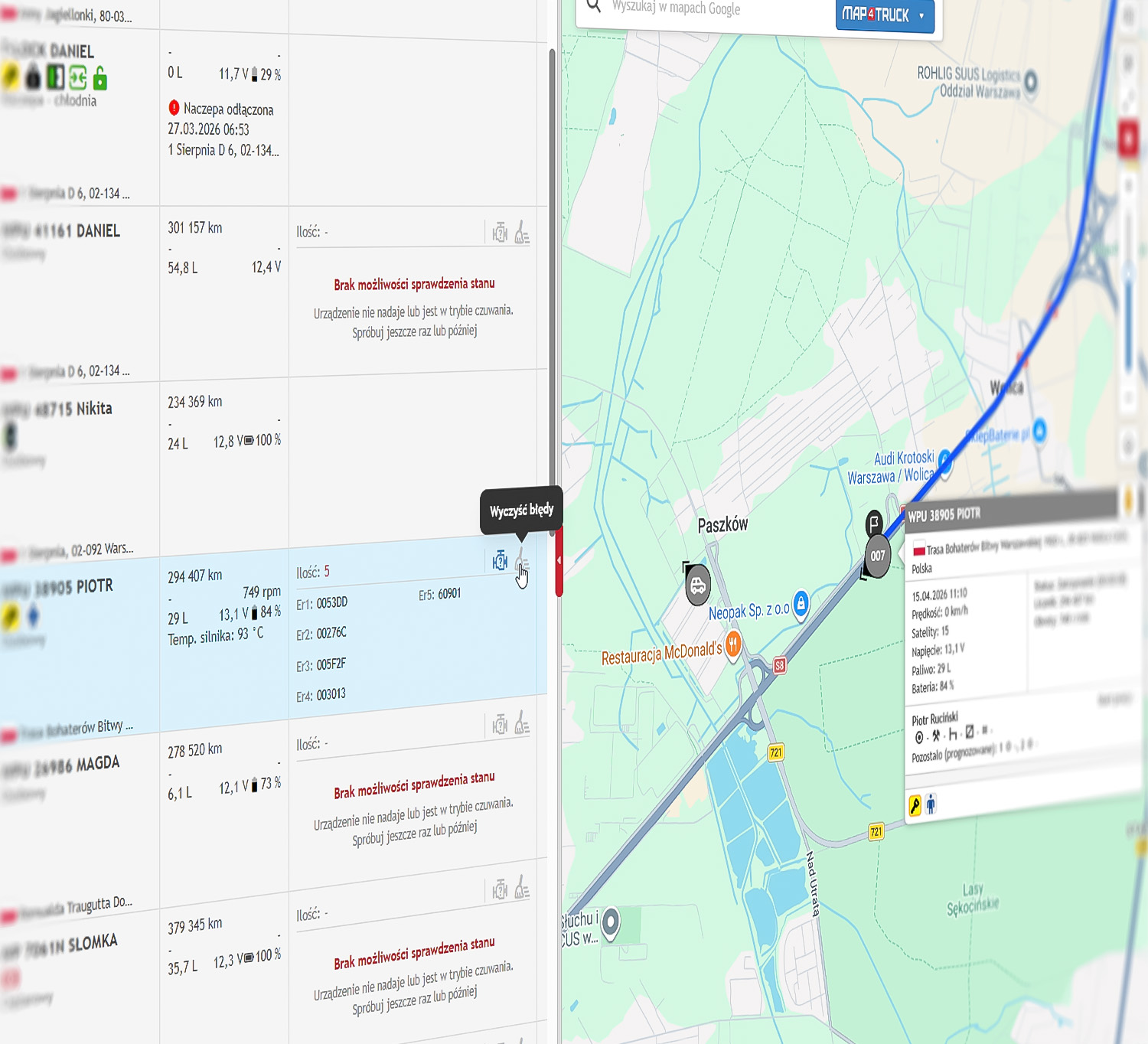
The system enables remote DTC fault reading, making it easier to quickly identify vehicle technical issues and take appropriate action.
The ability to remotely clear selected faults simplifies day-to-day vehicle management and enables faster response in situations that do not require immediate service intervention.
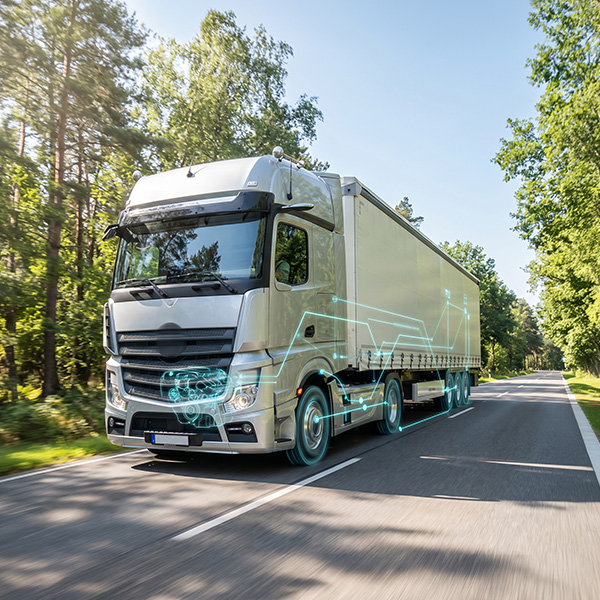
Continuous access to engine parameters makes it easier to monitor vehicle performance and quickly detect signals that may indicate faults or reduced efficiency.
The system supports ongoing vehicle performance monitoring, making it easier to analyze vehicle operation and respond more quickly to irregularities.
The schedule helps keep track of important vehicle service deadlines, making it easier to plan maintenance activities and maintain fleet continuity.
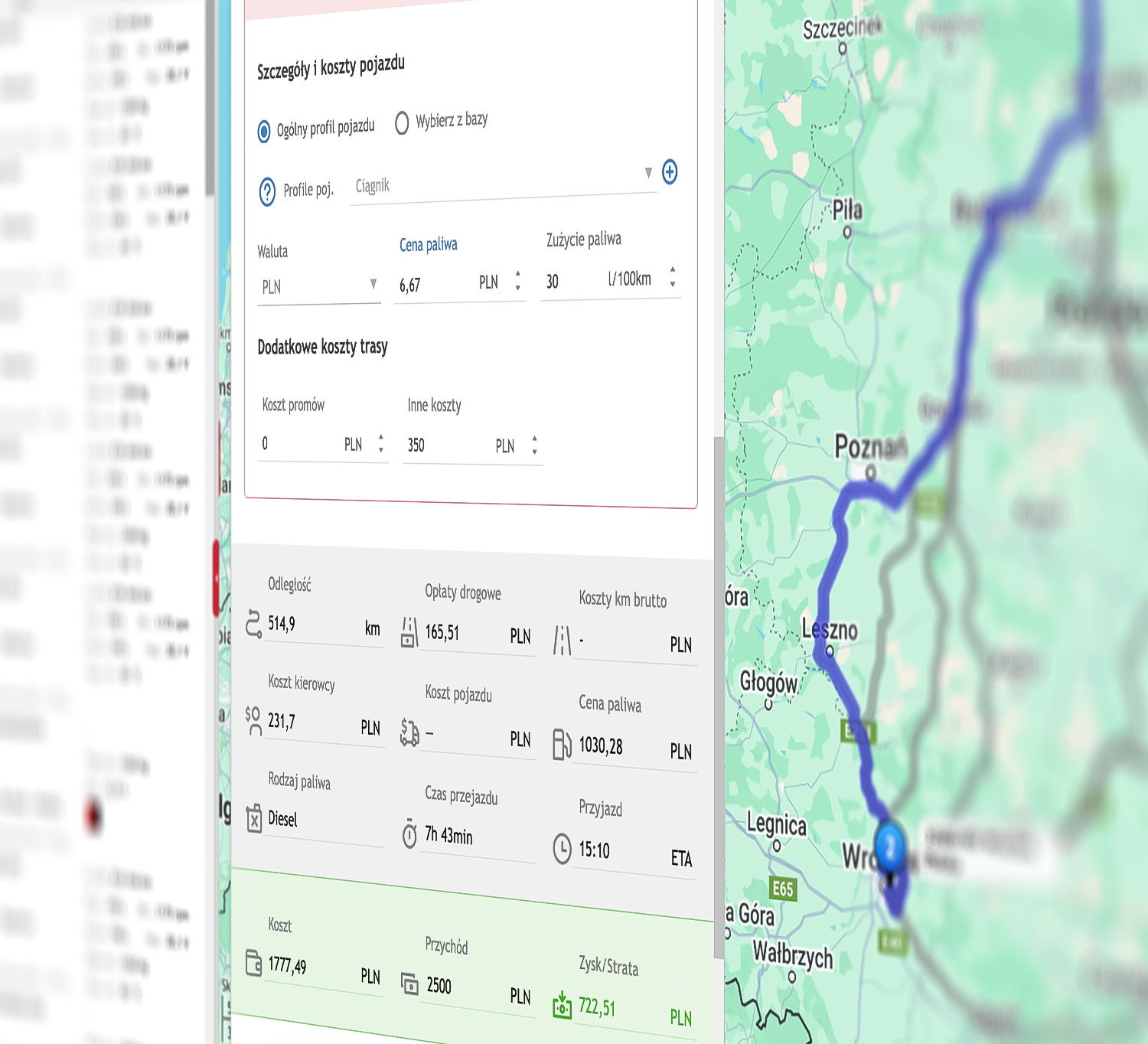
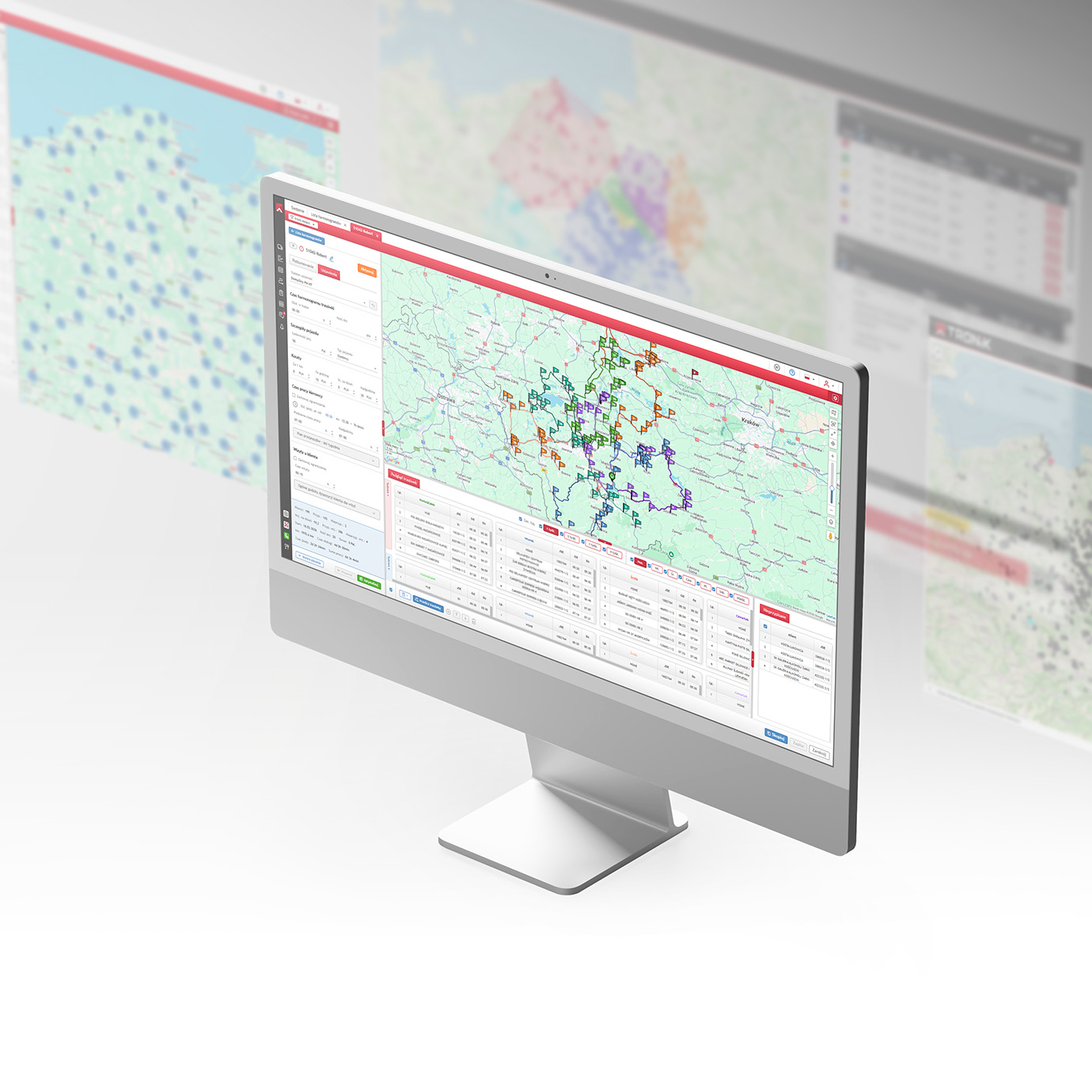
The system selects routes based on the vehicle type, ensuring the journey is better suited to its parameters and operating conditions.
Access to alternative routes makes it easier to respond quickly to changes during the journey and choose an option better suited to the current situation.
The system takes into account restrictions such as bridge heights, road weight limits, and ADR transport requirements, helping to avoid routes unsuitable for the vehicle or cargo type.
Automatic route profitability assessment makes it easier to compare route options and supports choosing a solution better aligned with operational costs.
The system helps analyze routes in terms of costs, including toll charges, providing greater control over expenses related to the journey.
Real-time road condition data helps better adapt routes to current traffic conditions and reduce the risk of delays or unnecessary detours.
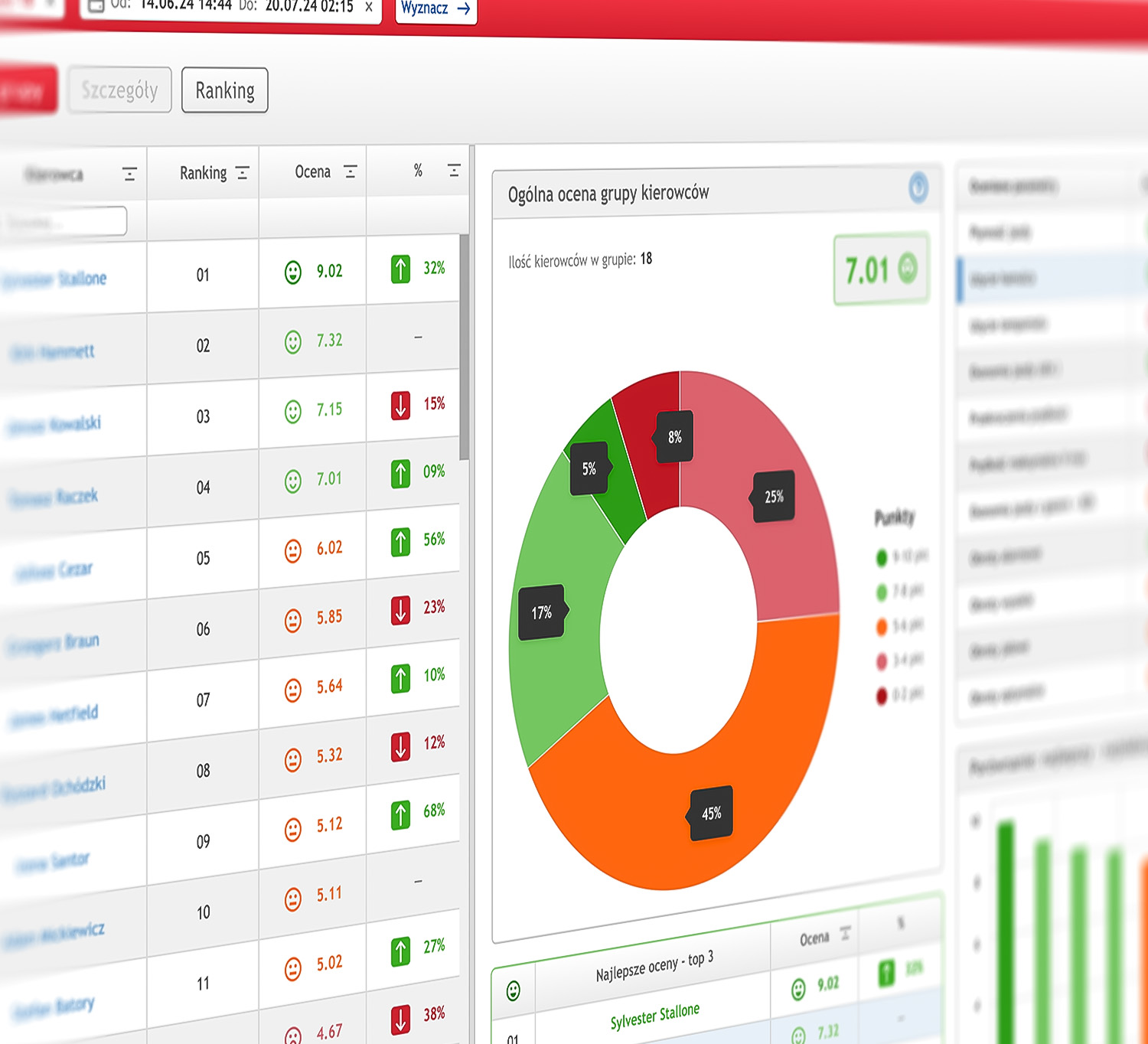
The system detects instances of harsh braking, making it easier to assess driving behavior and identify situations that may increase road safety risks.
Information about aggressive acceleration helps better analyze driving behavior and identify actions that may increase fuel consumption and accelerate vehicle wear.
The system records speeding events, making it easier to monitor compliance with driving policies and quickly identify behaviors that increase risk and operational costs.
Data on engine operation while stationary helps better assess fuel losses and identify areas where daily vehicle efficiency can be improved.
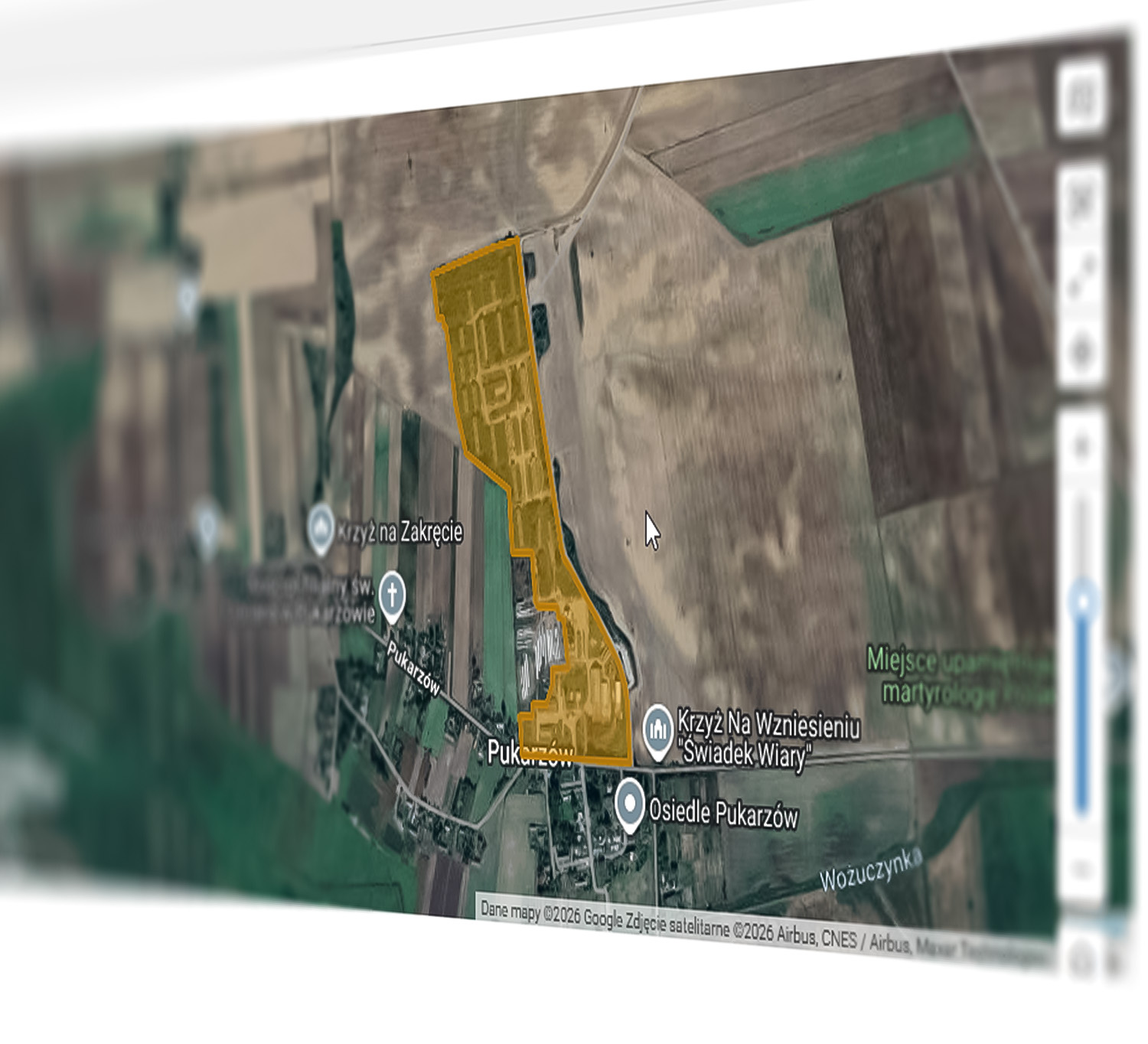
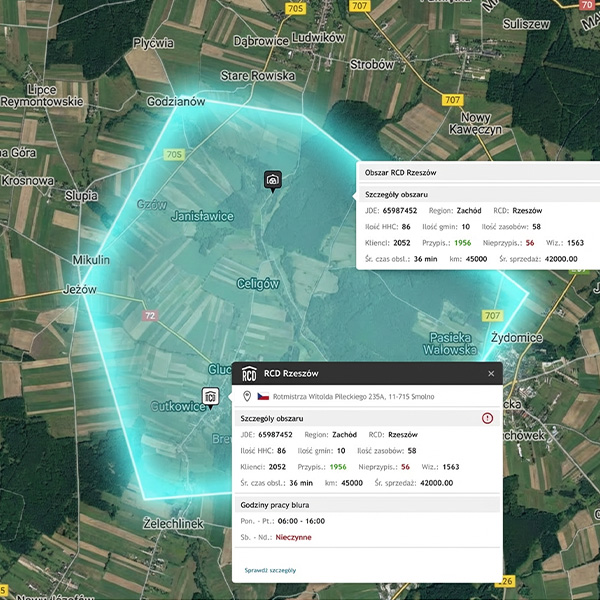
The system allows the creation of zones such as warehouses, depots, and delivery locations, making it easier to monitor vehicle activity at key operational points.
Automatic notifications about entering and leaving a zone improve journey visibility and allow for faster response to events requiring attention.
Data on vehicle presence in designated locations helps confirm task execution at specific route points and increases control over operational processes.
The system shows how long a vehicle remains within a specific zone, making it easier to analyze stops and quickly identify unplanned delays.
Alerts about deviations from the designated route corridor help quickly detect route irregularities and increase control over vehicle movement.
The history of zone events remains available in the system, making it easier to analyze journeys afterward and providing a more complete view of vehicle activity.
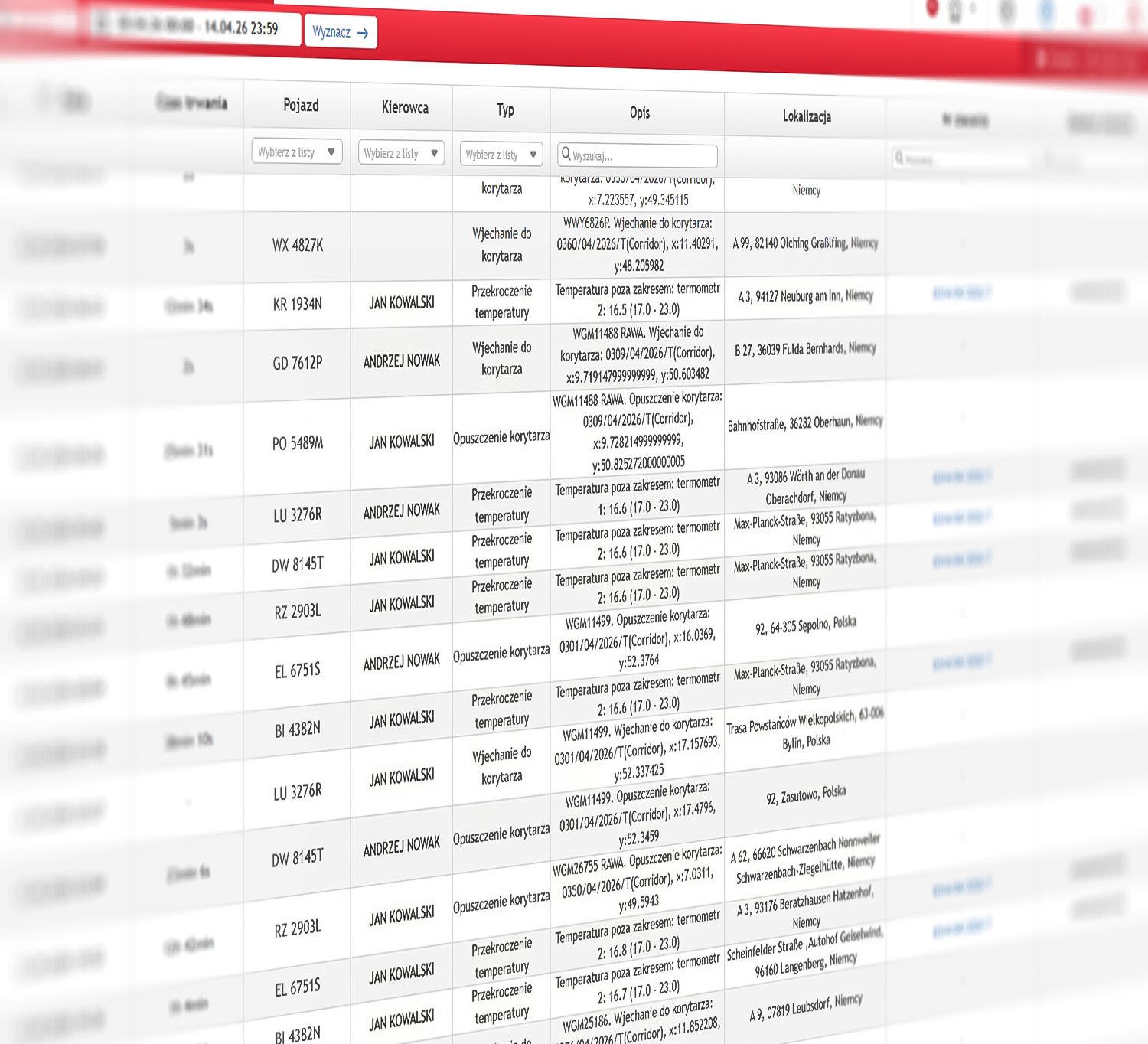
The system provides alerts related to designated areas and route corridors, helping to quickly detect deviations from the planned route.
Notifications about temperature changes allow for faster response when transport conditions deviate from the required parameters.
The system provides notifications when predefined speed limits are exceeded, increasing control over driving behavior and helping to quickly identify undesirable actions on the road.
Notifications about fuel loss help quickly identify irregularities and respond to events affecting operating costs.
The system signals when vehicle position data is unavailable, making it easier to quickly detect issues related to data transmission or localization.
Notifications about country changes improve route visibility and support ongoing monitoring of international transport operations.
Within the ATRAX platform, you can take advantage of existing solutions provided through our network of partners.
Each stage of cooperation leads from needs analysis
to implementation and further development
of the solution. This ensures the system is
tailored to the fleet, operations, and real-world business
challenges.
01
We discuss fleet needs and requirements.
02
We analyze the fleet, processes, and operational workflow.
03
We select technological solutions that best meet actual operational needs.
04
We prepare a tailored offer and a preliminary system concept for your organization.
05
We adapt the system to technical and operational requirements
06
We install the devices, configure the environment, and
train the team in daily system operation.

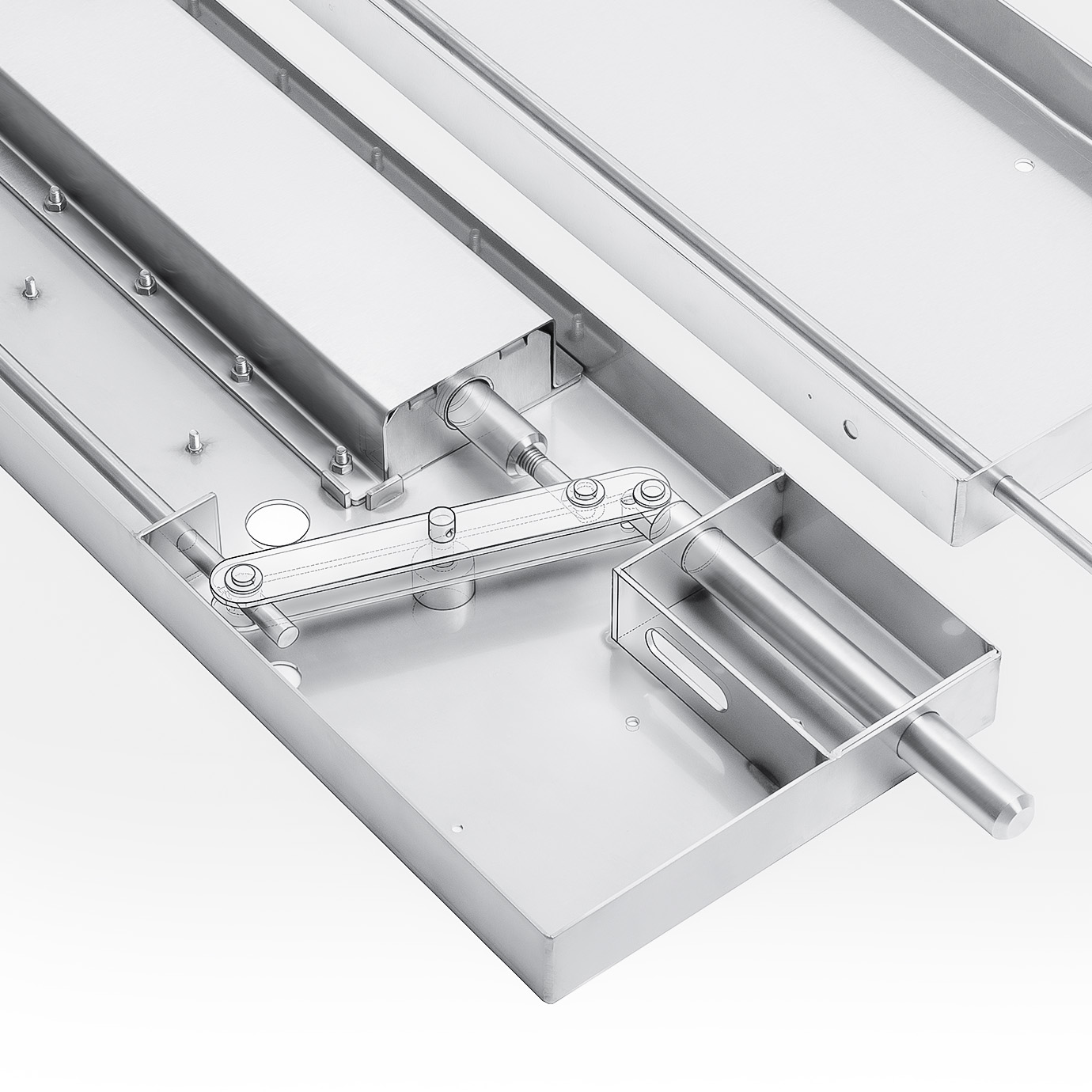

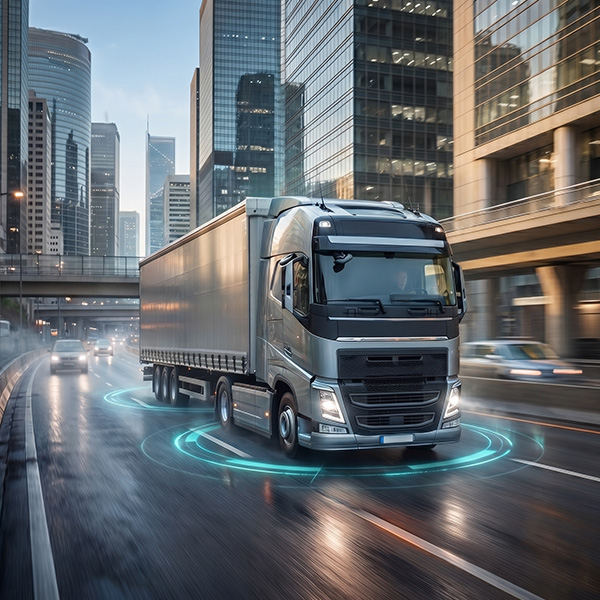
Tested in a wide temperature range, it guarantees the safe arrival of goods to the recipient. Using the intuitive ATRAX4 platform, authorized employees at your company can remotely lock and unlock the trailer doors and, if necessary, generate a unique code for the driver. The telematics system also allows you to constantly track the trailer's location and generate route and incident reports.